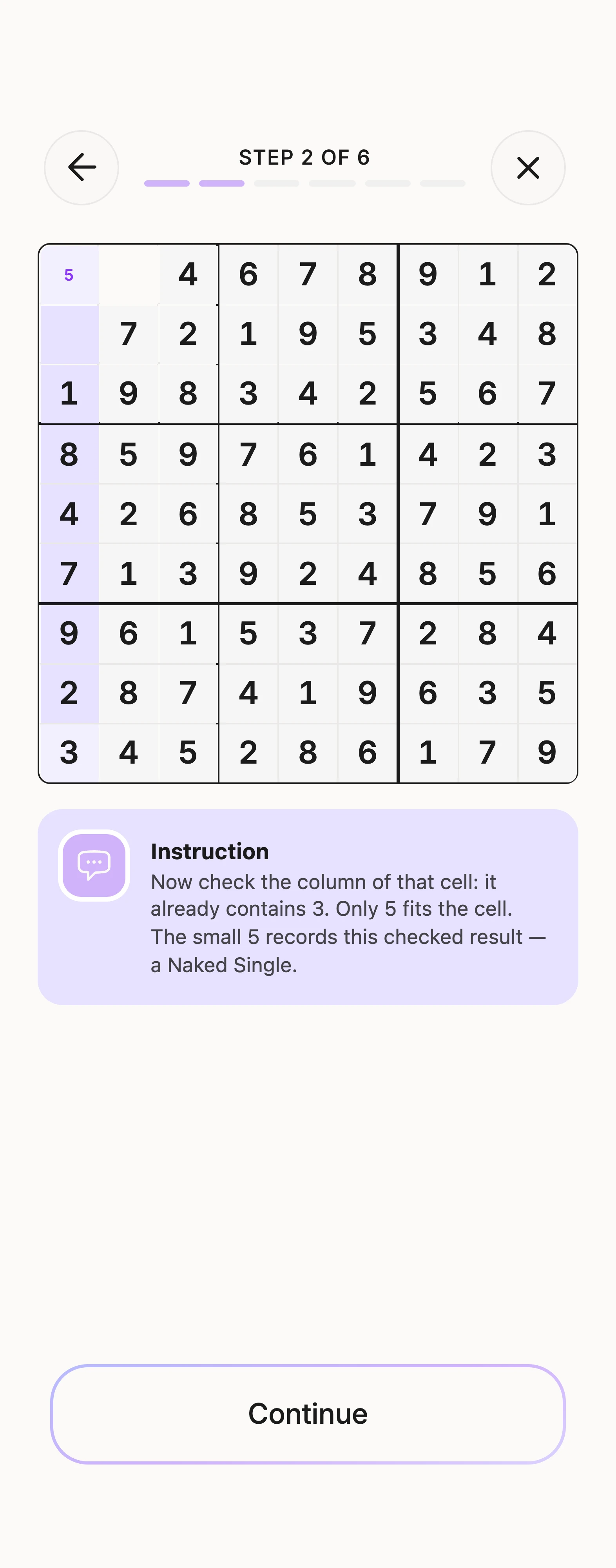
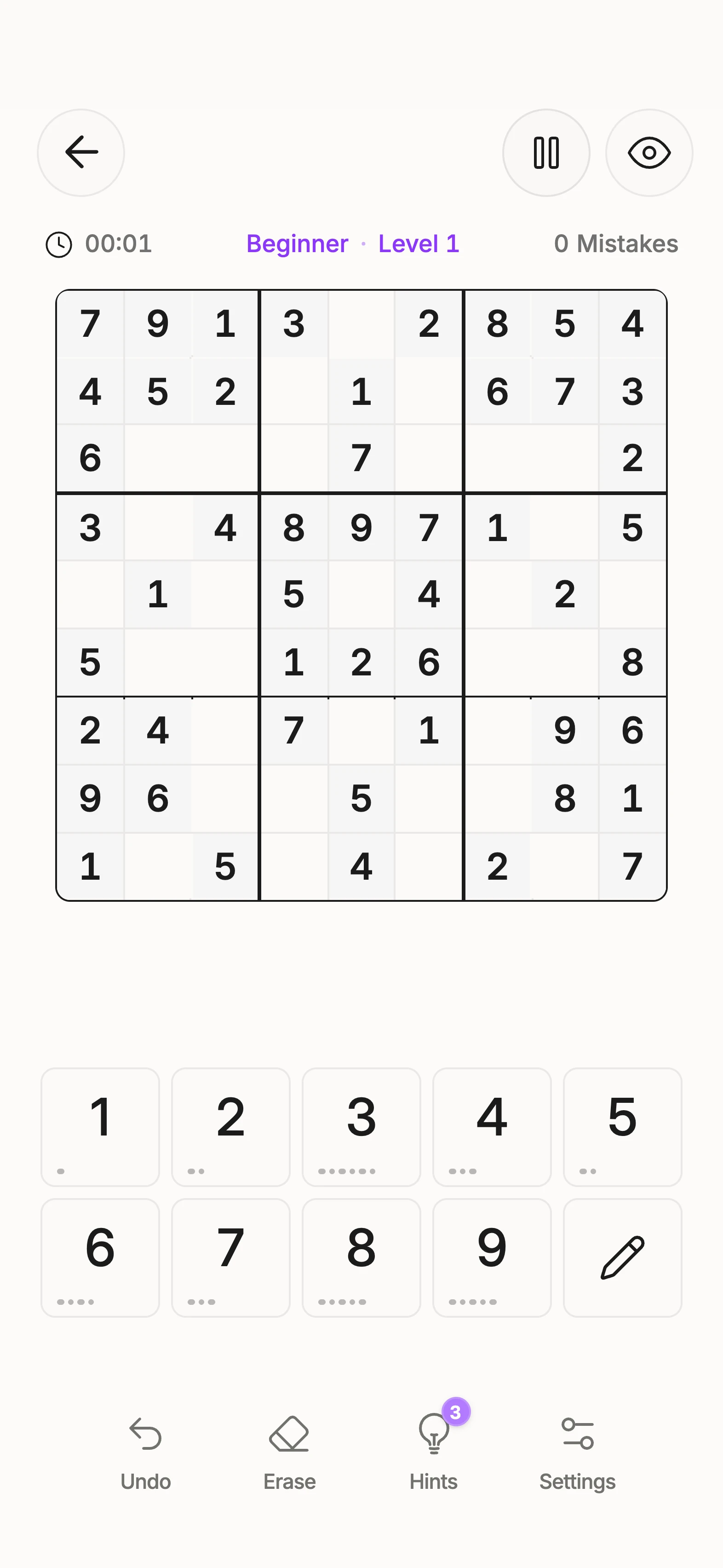
View the example grid
A Full House has just one empty cell in a row, column or 3×3 box. The one missing digit belongs in that cell.
An example from the app
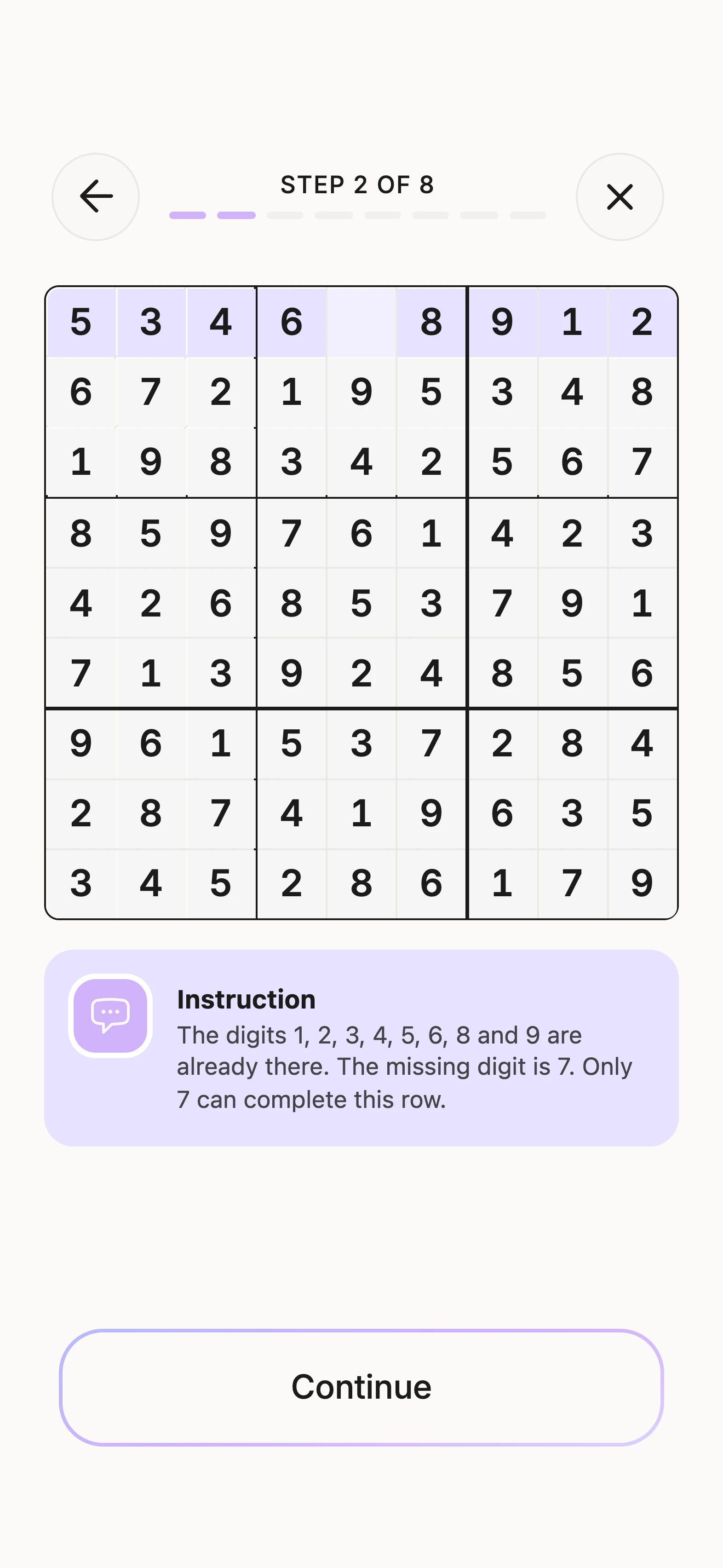
Look at the highlighted row. Eight cells are filled and only one is empty.
The digits 1, 2, 3, 4, 5, 6, 8 and 9 are already there. The missing digit is 7. Only 7 can complete this row.
Practice the next step
With several empty cells, you need more information. Knowing the missing digits alone does not assign their positions.
In the app, follow the reasoning in the matching lesson and try a task yourself. With a new puzzle, always start from its actual candidate state.
Questions about Full House
Where can a Full House occur?
In a row, column or 3×3 box. That area must have just one empty cell.
How do I find the missing digit?
Compare the digits present with 1 through 9. The only missing digit goes in the remaining cell.
Do I need candidate notes?
Not necessarily. The eight digits already present determine the missing ninth digit.
Is a row with two empty cells a Full House?
No. Knowing the two missing digits alone does not determine which cell each belongs in.
How does Full House differ from Naked Single?
Full House uses an area’s only empty cell. Naked Single uses a cell’s only candidate, even when its surrounding areas have several gaps.
Keep practicing in Unisu
Download Unisu for iPhone or Android. Solve a puzzle or work through a guided lesson on the technique.