Fundamentals
Full House: One gap, one missing digit
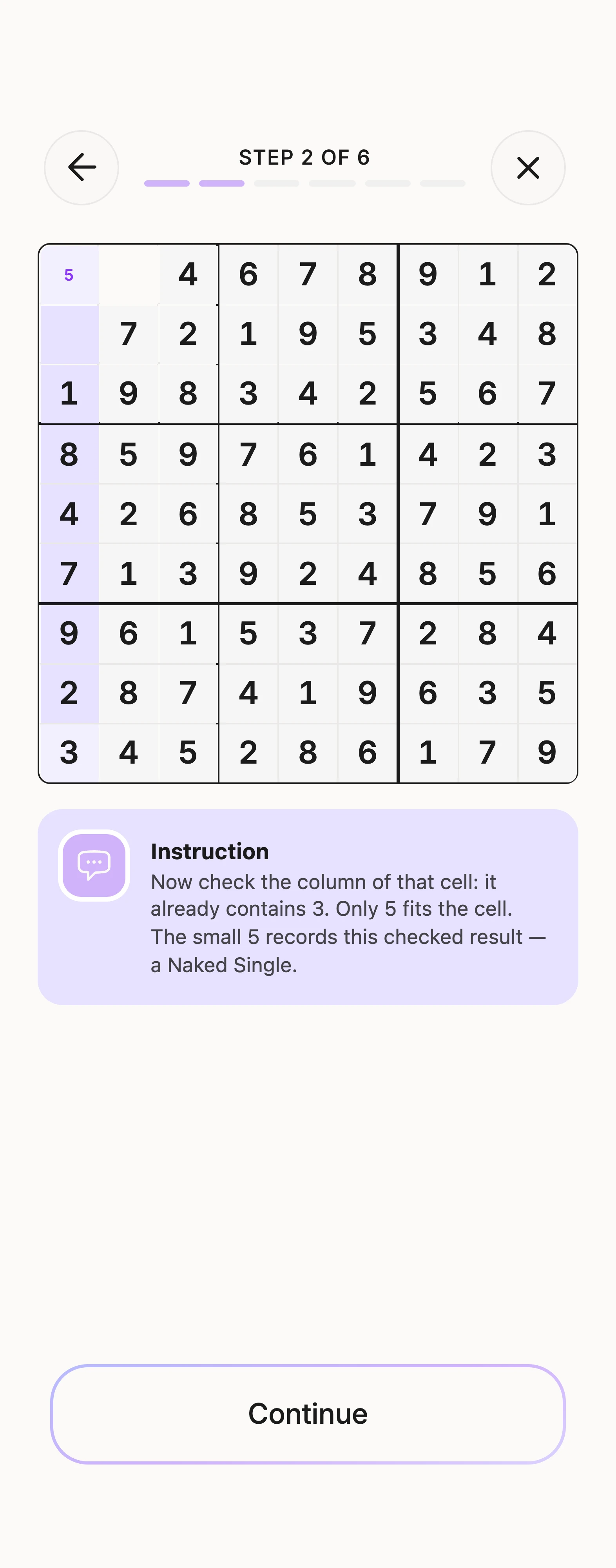
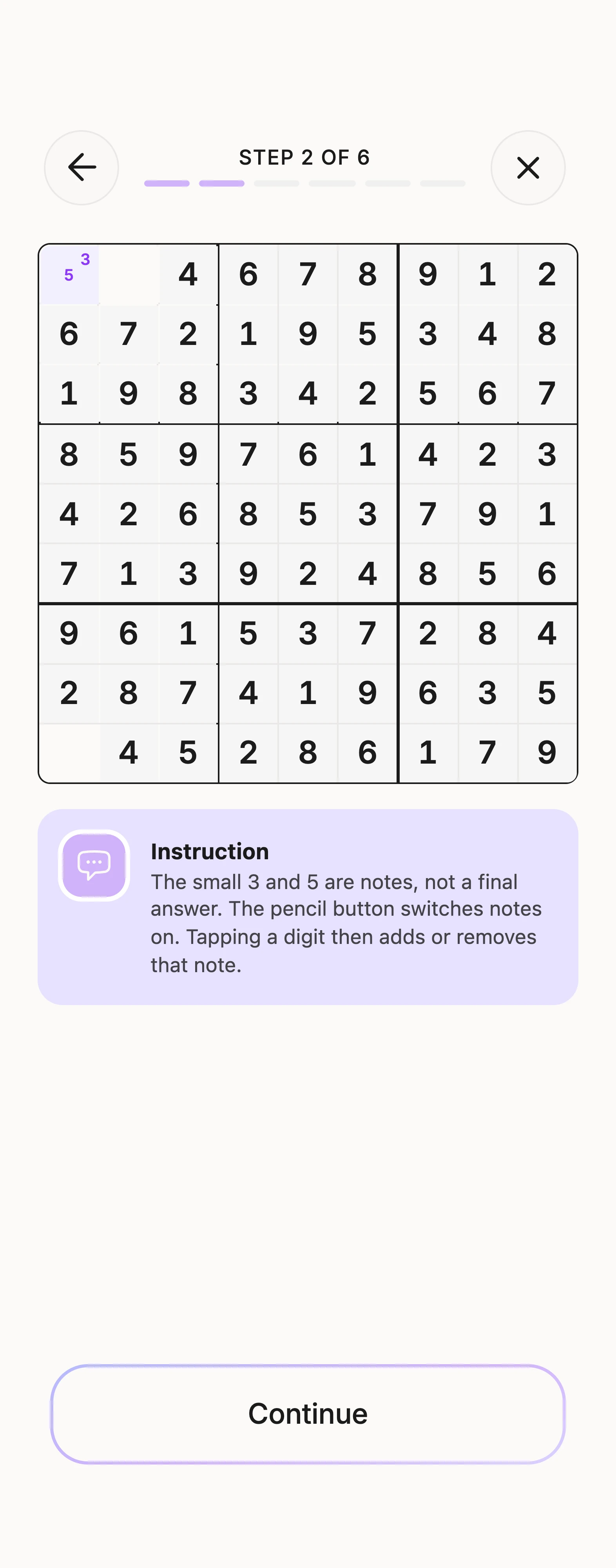
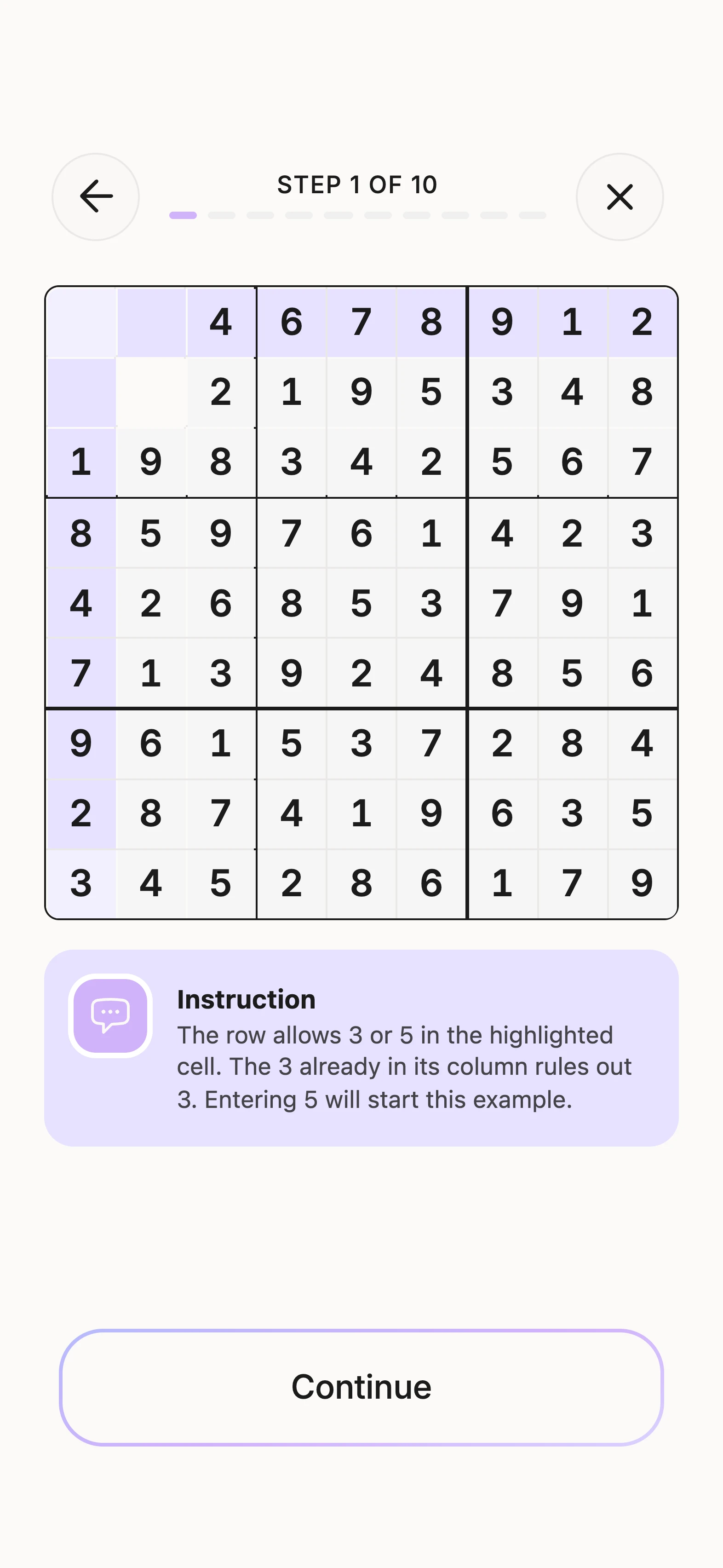
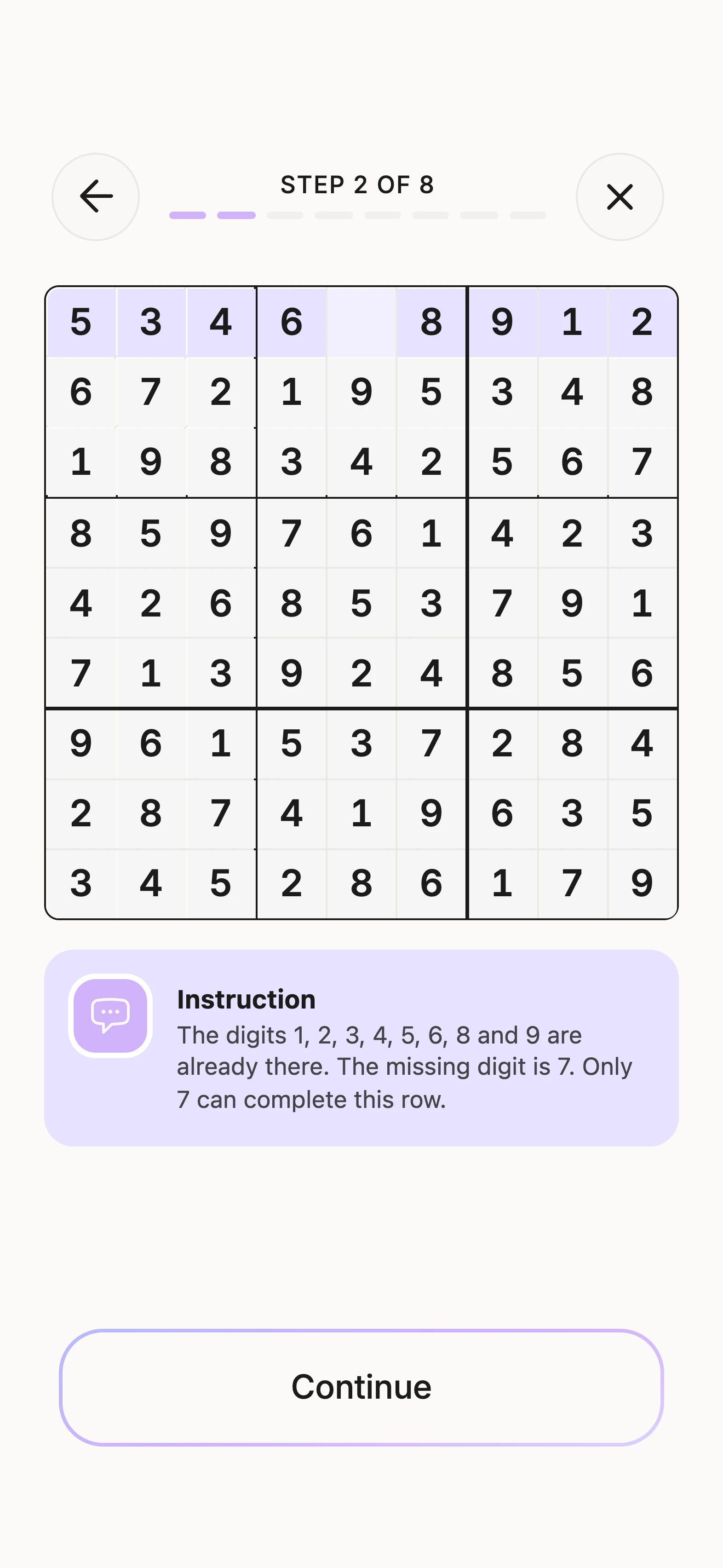
A Full House has just one empty cell in a row, column or 3×3 box. The one missing digit belongs in that cell.
Read more: Full House: One gap, one missing digit Unisu Sudoku
 Choose language
Singles, pairs, wings and chains address different situations. Find their prerequisites and a guide to the pattern you need.
Choose a technique whose prerequisites make sense to you. A complex name doesn’t improve a simple move. After placing a number or removing a candidate, check for singles again.
Full House needs only an area with one gap. Naked Single and Hidden Single apply the basic rules to the remaining possibilities. Pairs, wings and chains need an accurate candidate state in the areas being examined.
Each introduction explains its core idea using one example. Use the groups below to find a guide; the app covers further variations and guided practice.
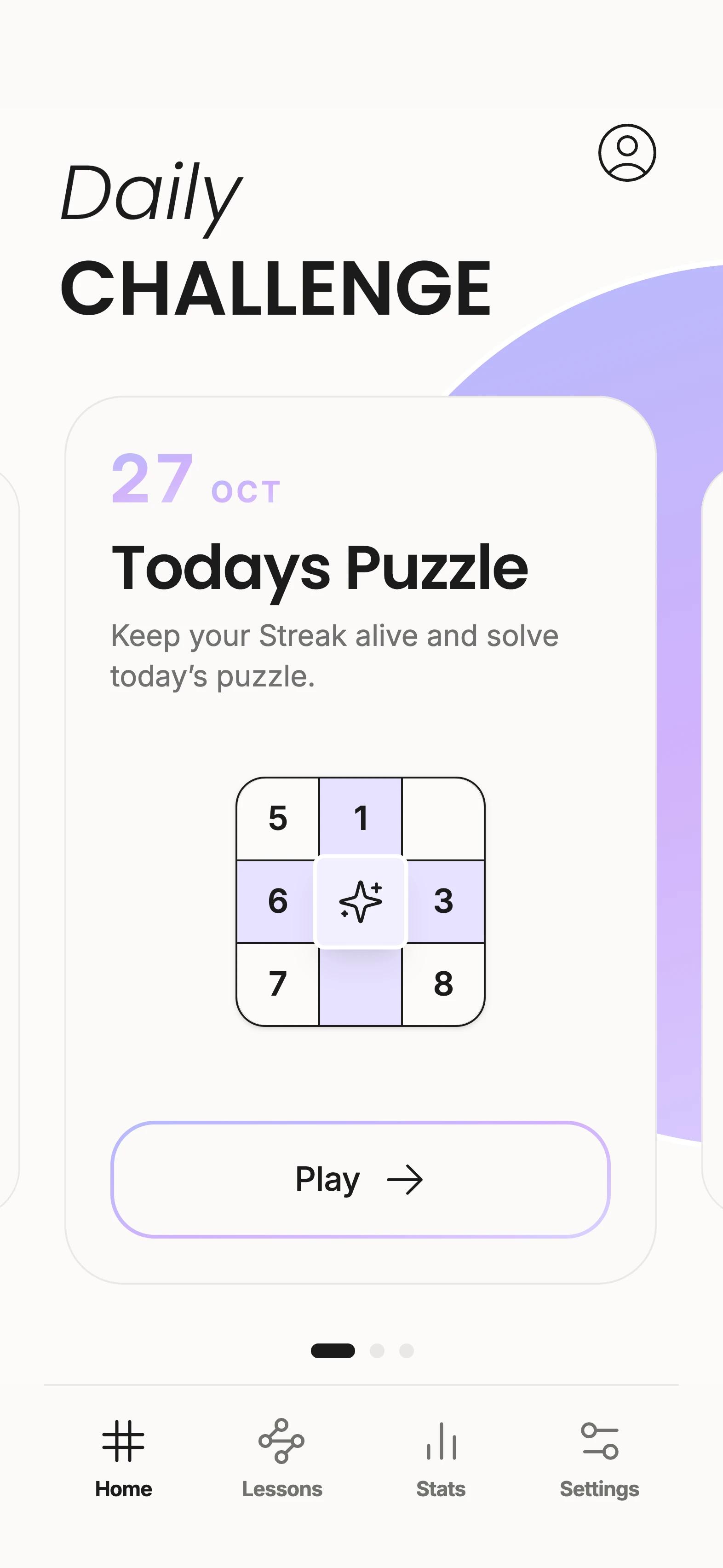
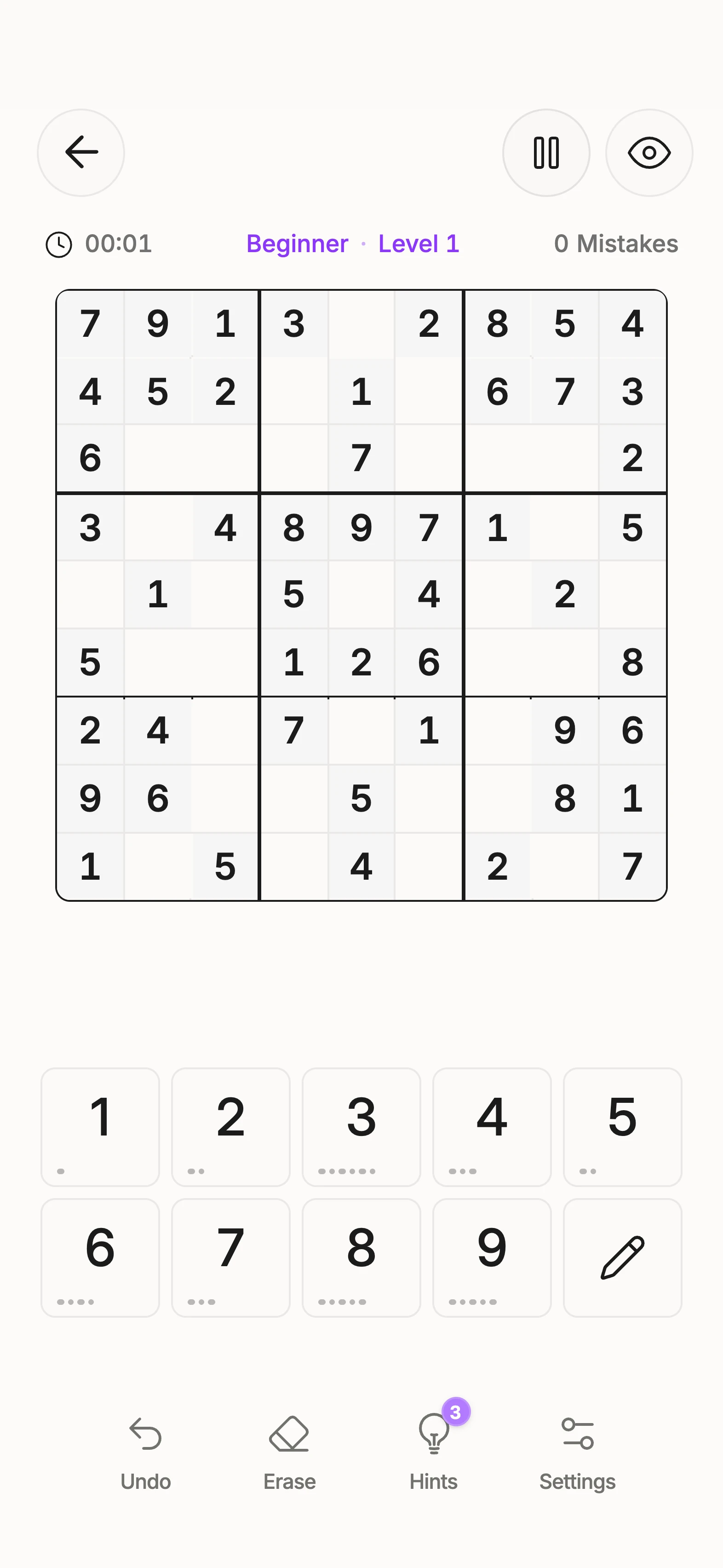
Download Unisu for iPhone or Android. Solve a puzzle or work through a guided lesson on the technique.


A Full House has just one empty cell in a row, column or 3×3 box. The one missing digit belongs in that cell.
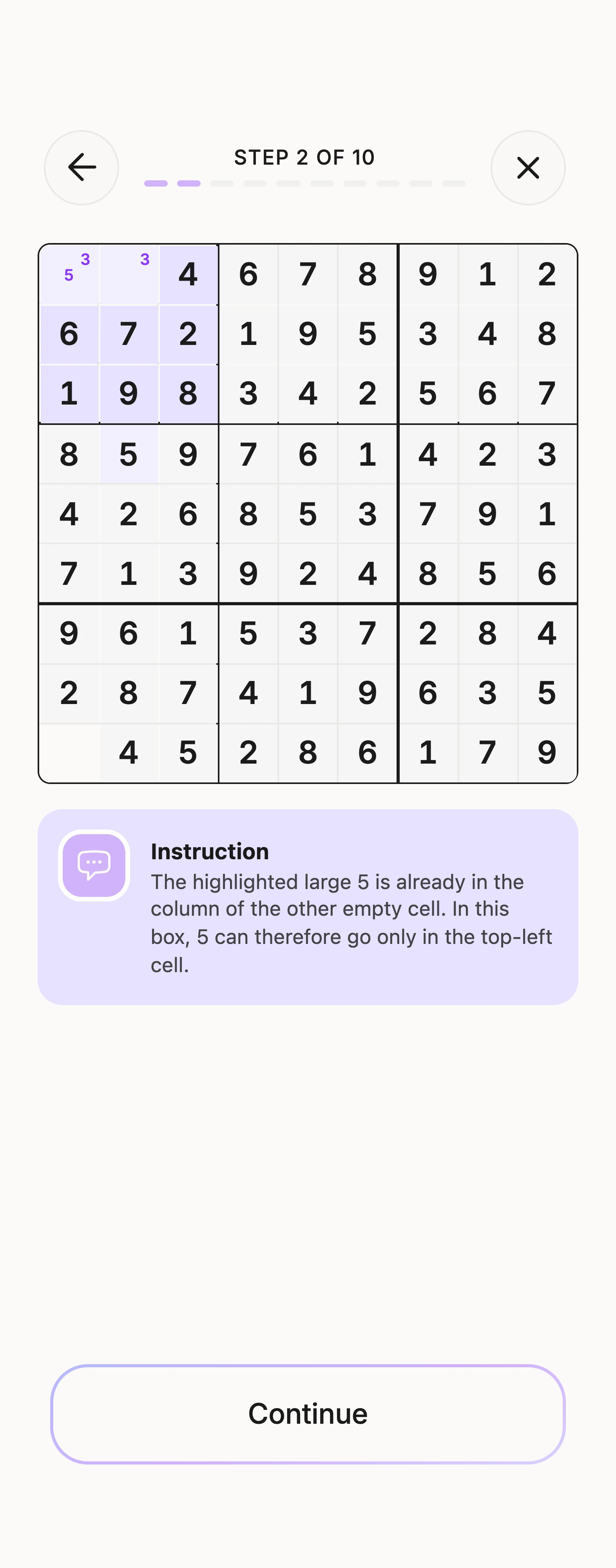
Read more: Full House: One gap, one missing digitA Naked Single is a cell with exactly one candidate remaining. Its row, column and box rule out every other digit.
Read more: Naked Single: One candidate left in a cellA Hidden Single occurs when a digit has only one possible place in a row, column or box. The cell itself can still have other candidates.
Read more: Hidden Single: One place left for a digitNo articles found. Try another search.
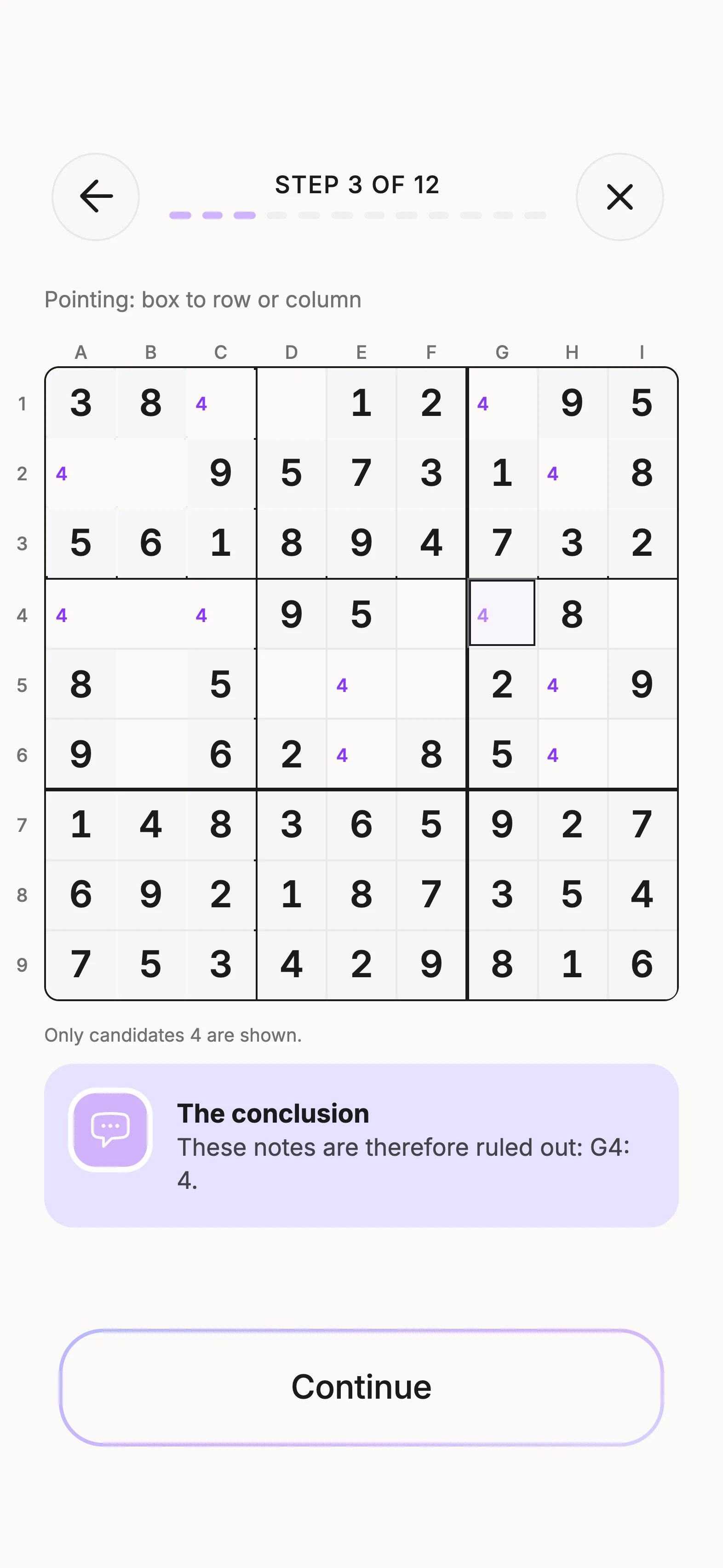
Locked Candidates: when all candidates for a digit in a box lie on one row or column, remove that digit from the rest of that line outside the box.
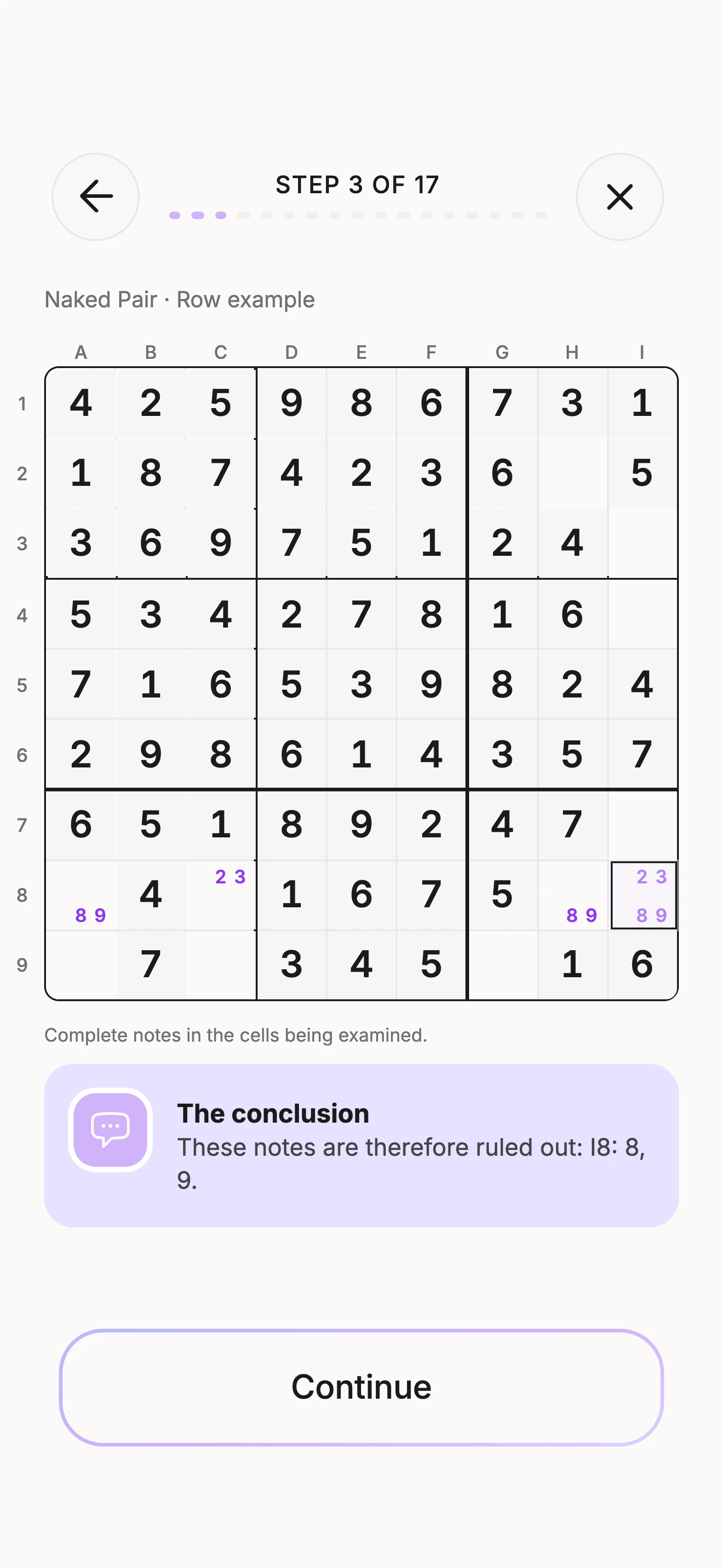
Read more: Locked Candidates: Use the overlap between a box and a lineA Naked Pair has two cells in one row, column or box with only the same two candidates. Remove those digits from the other cells in that area.
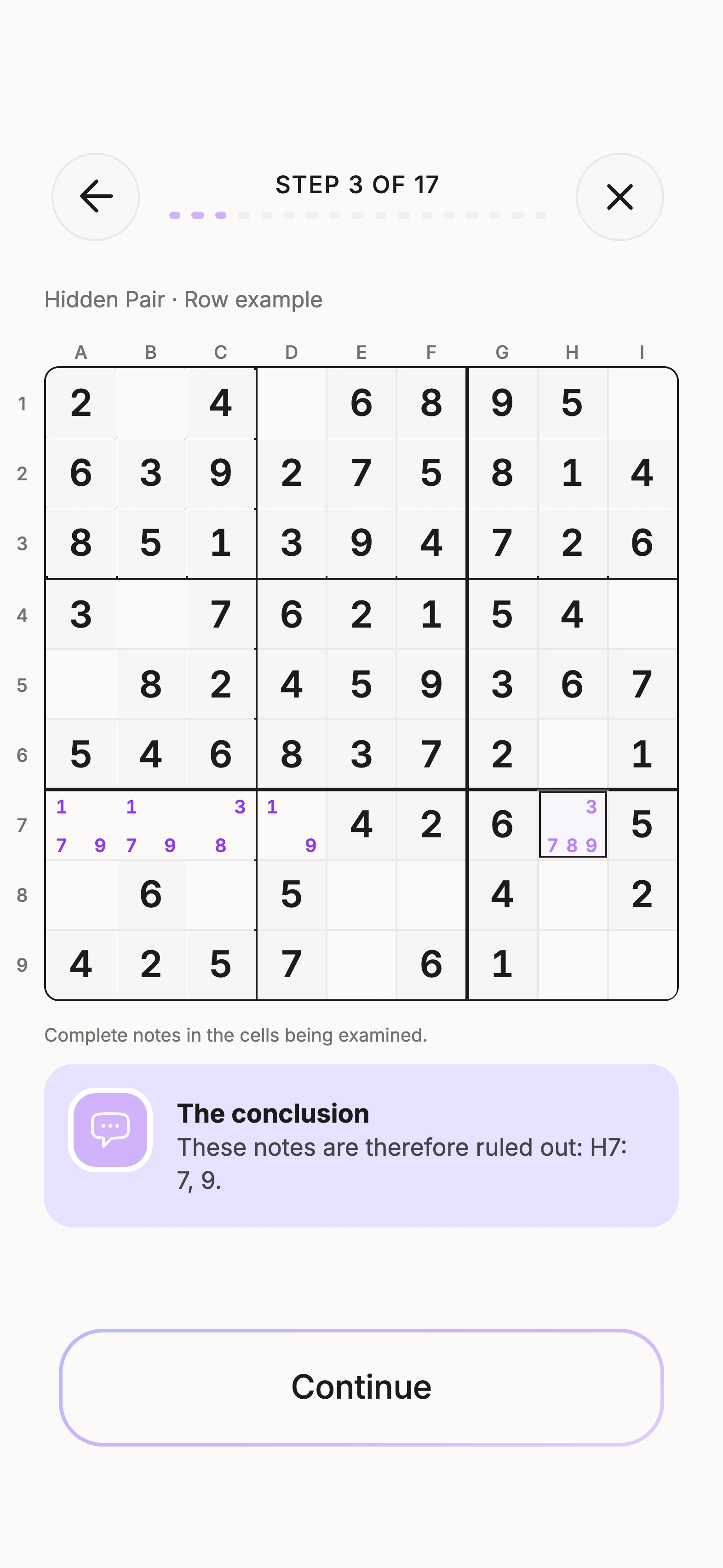
Read more: Naked Pair: Two cells reserve two digitsIf two digits can appear only in the same two cells of an area, they form a Hidden Pair. Other candidates can be removed from those two cells.
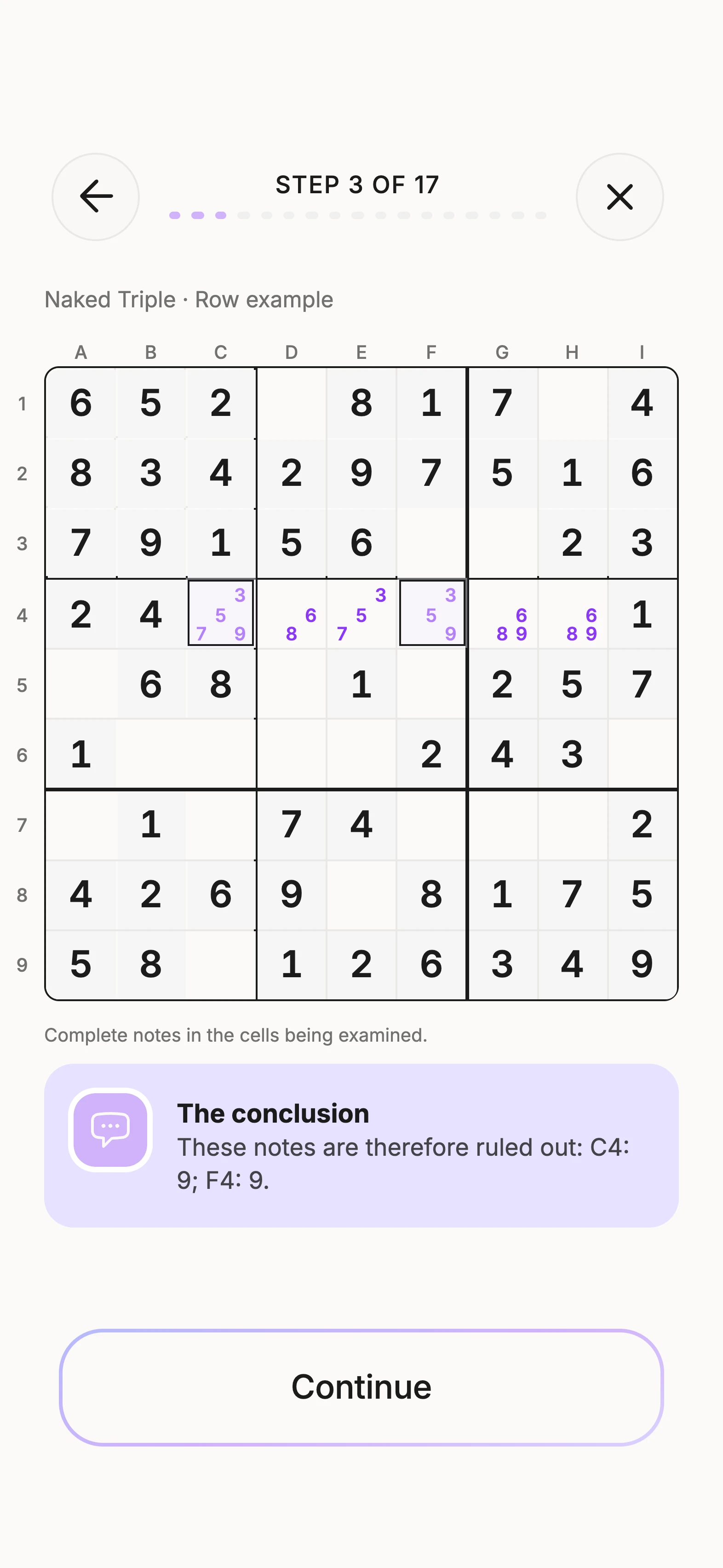
Read more: Hidden Pair: Two digits have just two placesA Naked Triple has three cells in one area with just three different candidates between them. Remove those digits from the other cells in that area.
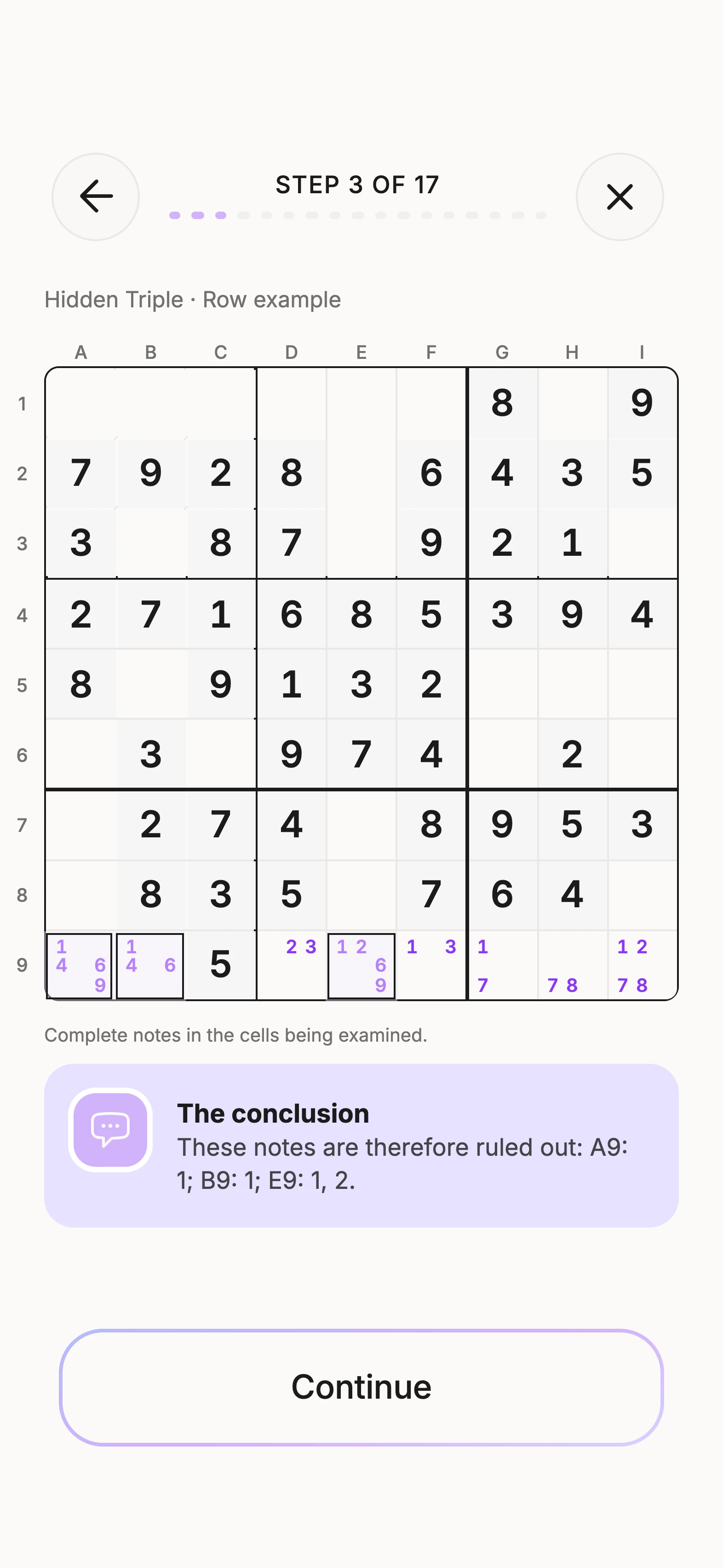
Read more: Naked Triple: Three cells share three candidatesA Hidden Triple occurs when three digits have only three possible cells between them in a row, column or box. Extra candidates in those cells can be removed.
Read more: Hidden Triple: Three digits confined to three cellsNo articles found. Try another search.
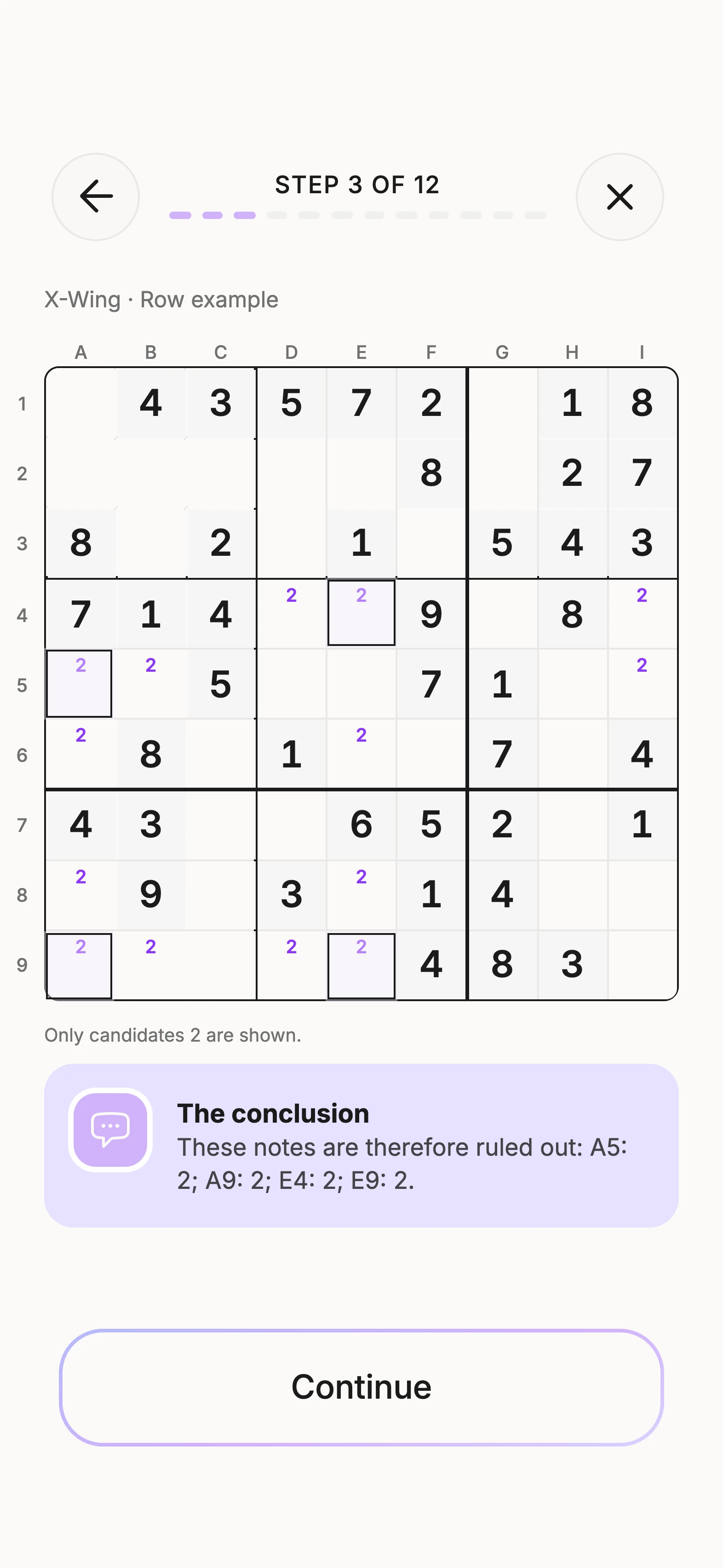
An X-Wing has a digit in exactly two possible cells in each of two rows, in the same two columns. Learn which candidates this pattern rules out.
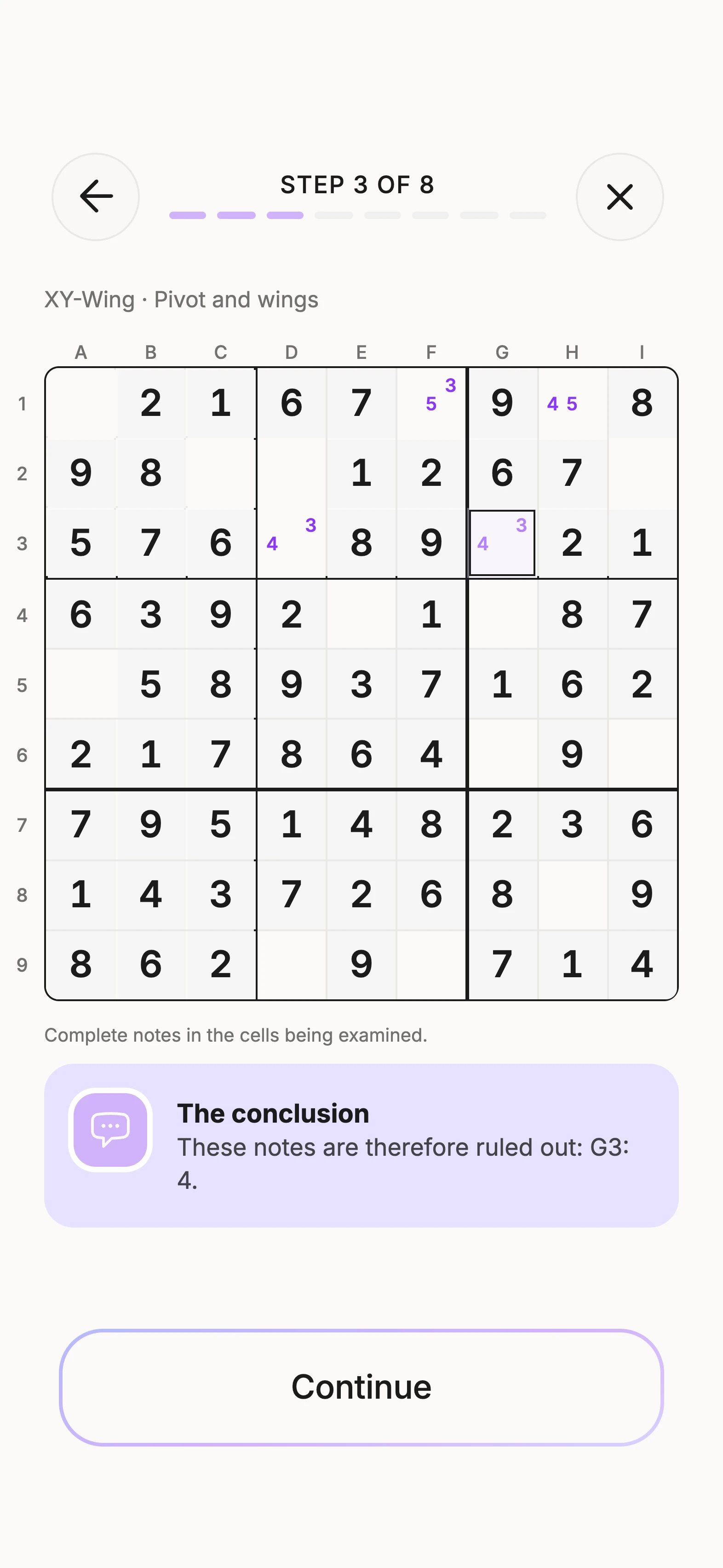
Read more: X-Wing: Two rows, the same two columnsAn XY-Wing connects a pivot cell X/Y to two cells it sees, X/Z and Y/Z. Whichever digit goes in the pivot, one wing must contain Z.
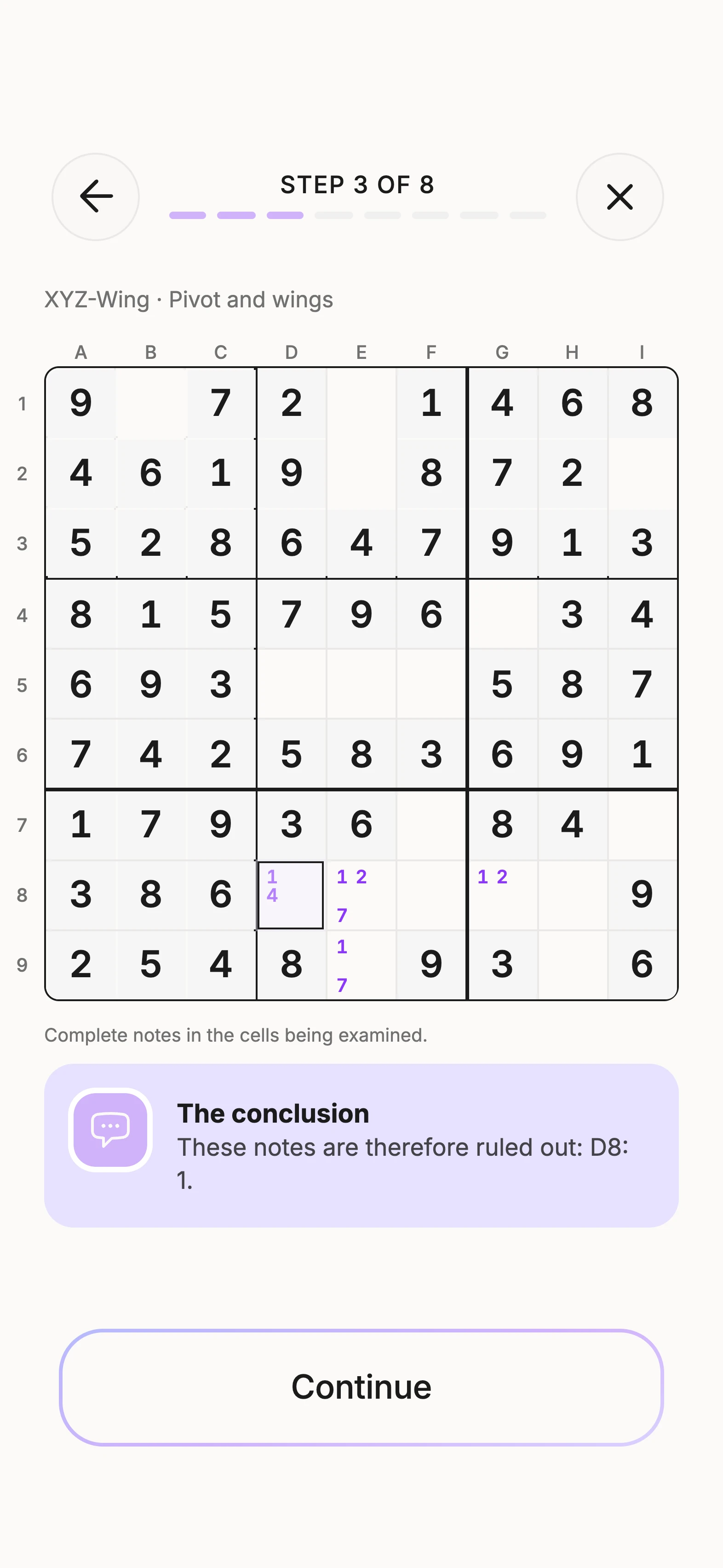
Read more: XY-Wing: A pivot and two wingsAn XYZ-Wing has a pivot X/Y/Z and two cells it sees, X/Z and Y/Z. At least one of these three cells must contain Z.
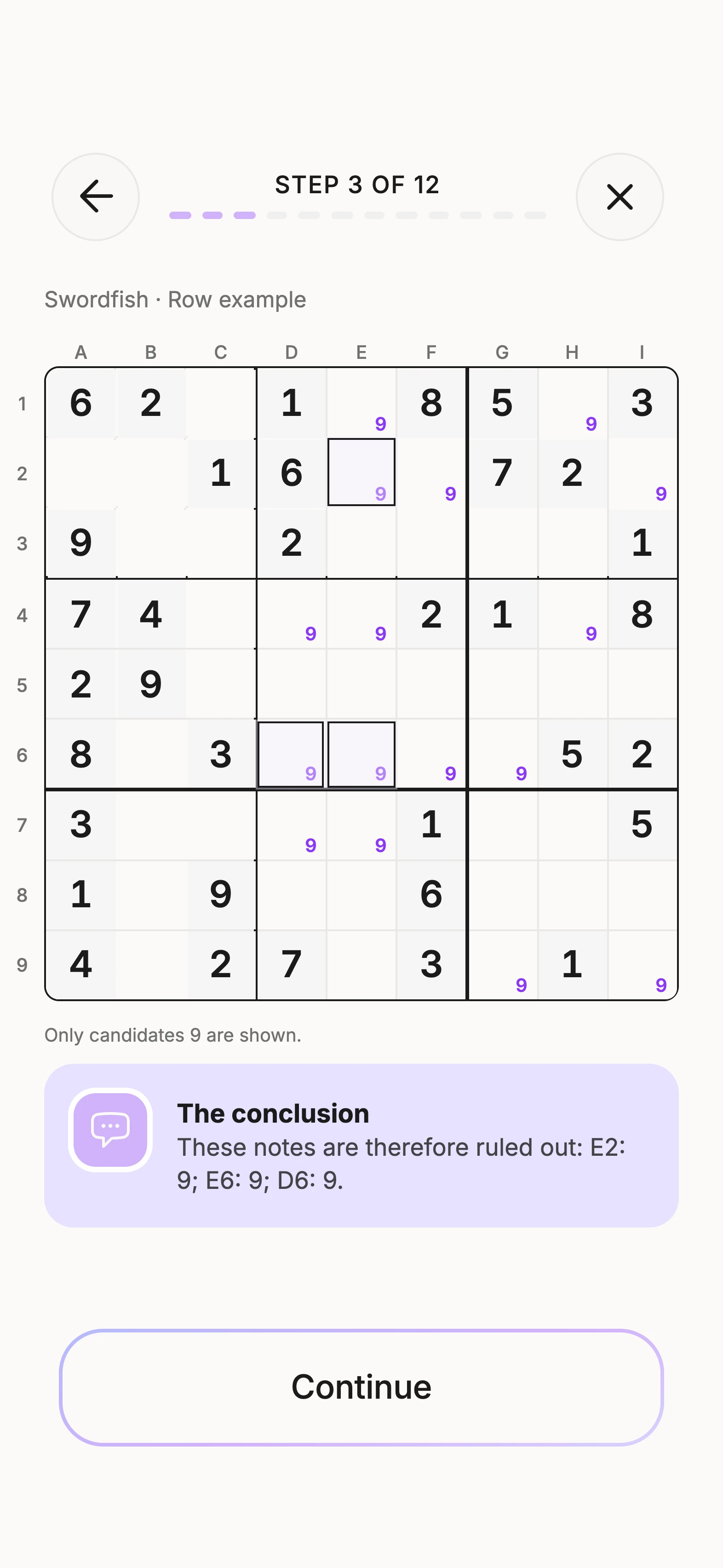
Read more: XYZ-Wing: Three candidates in the pivotA Swordfish confines a digit’s candidates in three starting rows to exactly three columns. The three required placements use those columns.
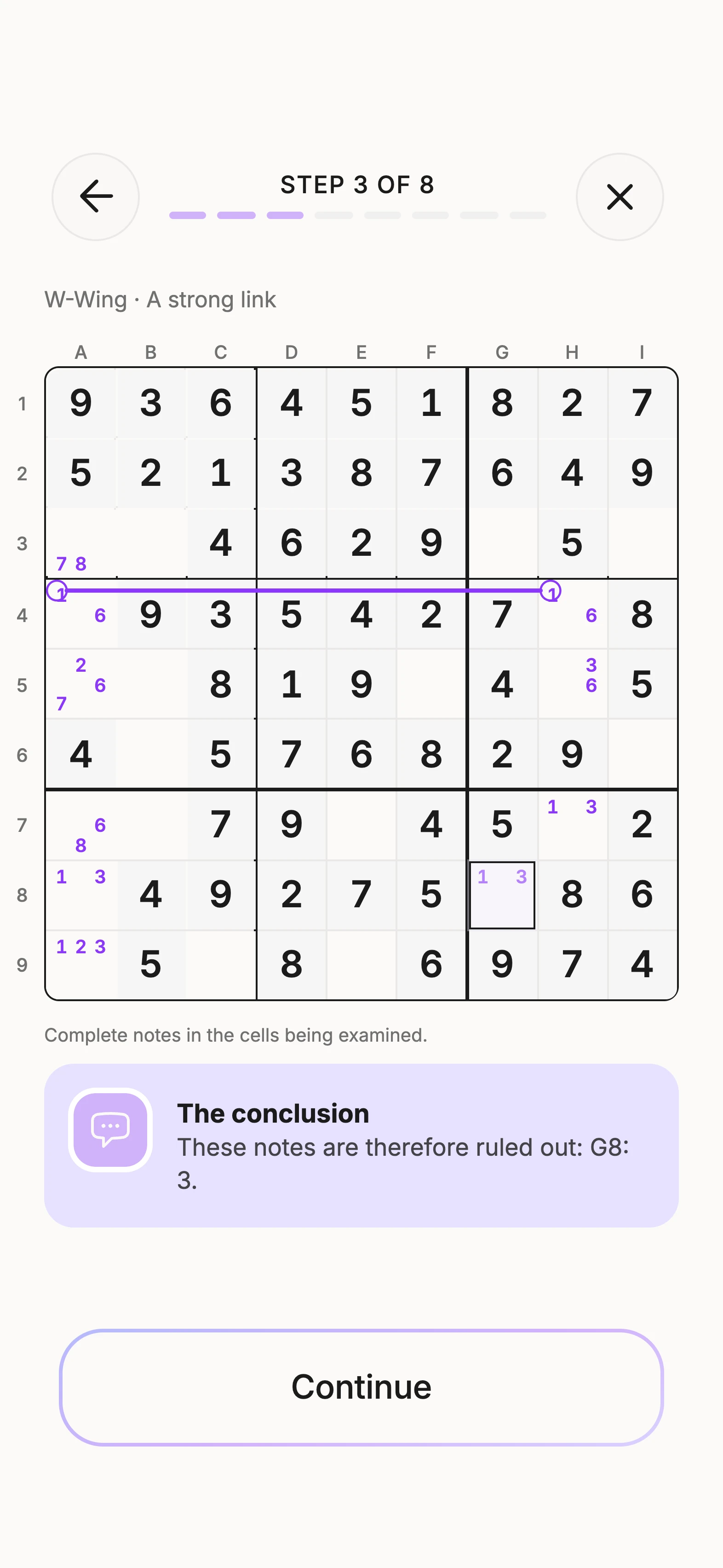
Read more: Swordfish: Follow one digit across three linesA W-Wing links two cells with the same candidate pair through a strong link. Follow the example to see how that connection rules out another candidate.
Read more: W-Wing: A matching pair joined by a strong linkNo articles found. Try another search.
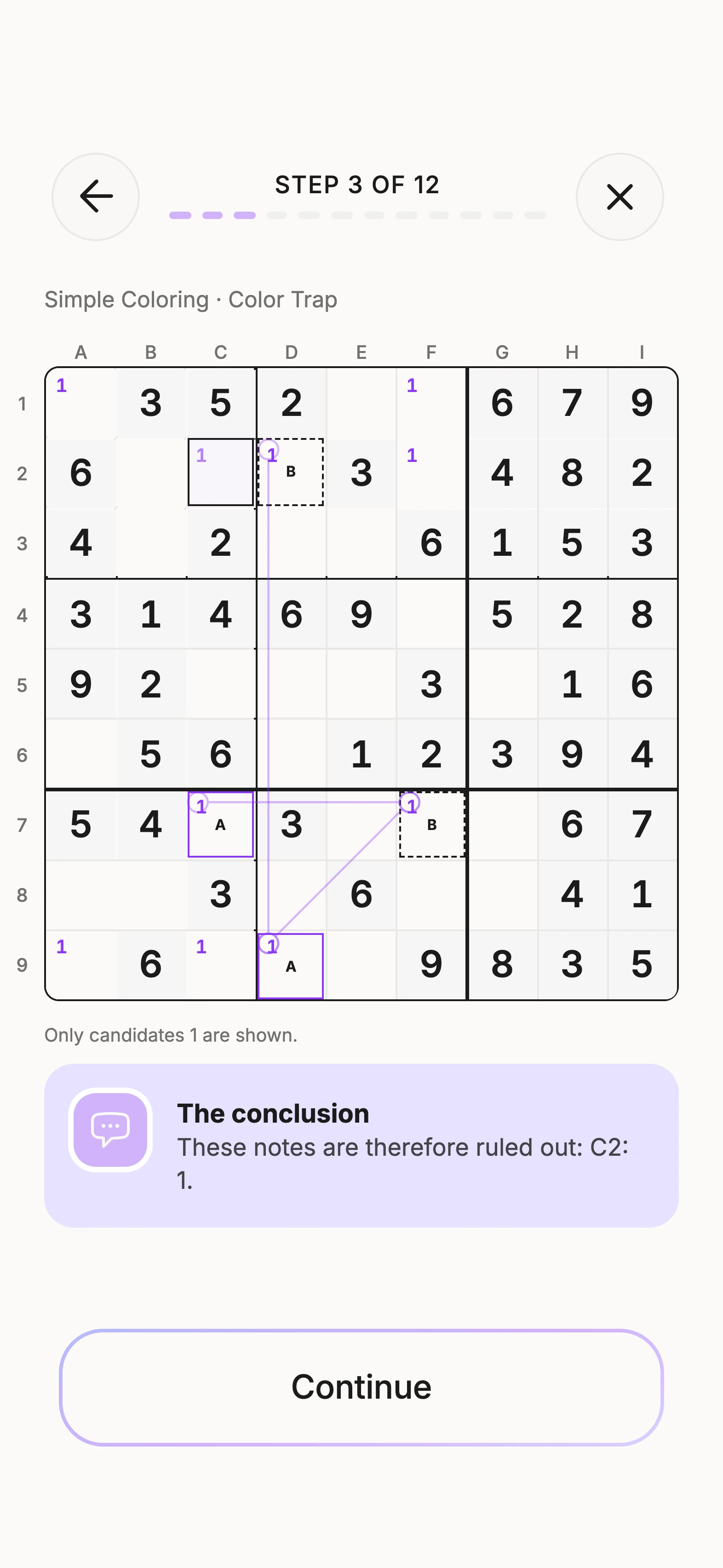
Simple Coloring follows strong links for one digit. When an area has exactly two places for it, one must be true. Alternating groups show those dependencies.
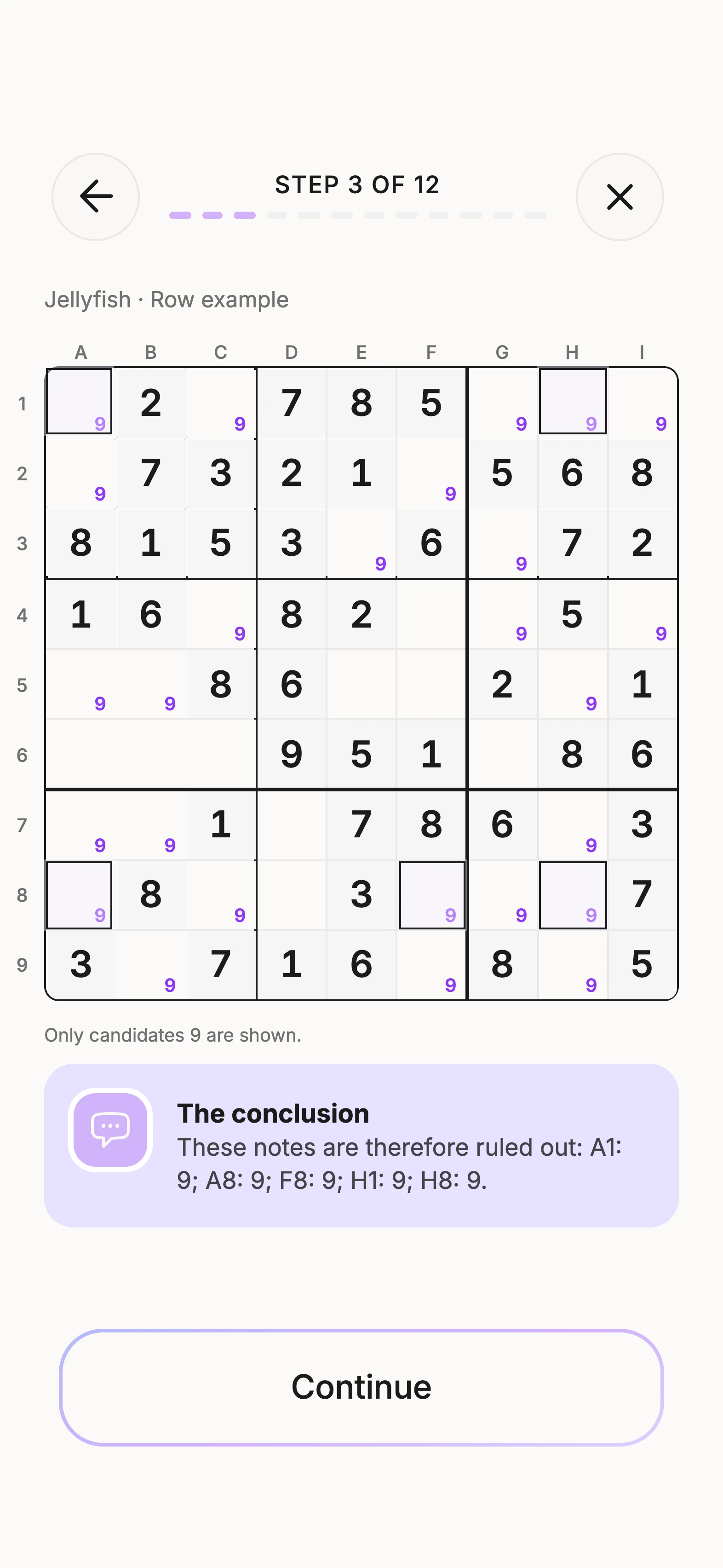
Read more: Simple Coloring: Follow one digit in two groupsA Jellyfish confines a digit’s candidates in four rows to four columns. Learn how this pattern rules out candidates outside those starting rows.
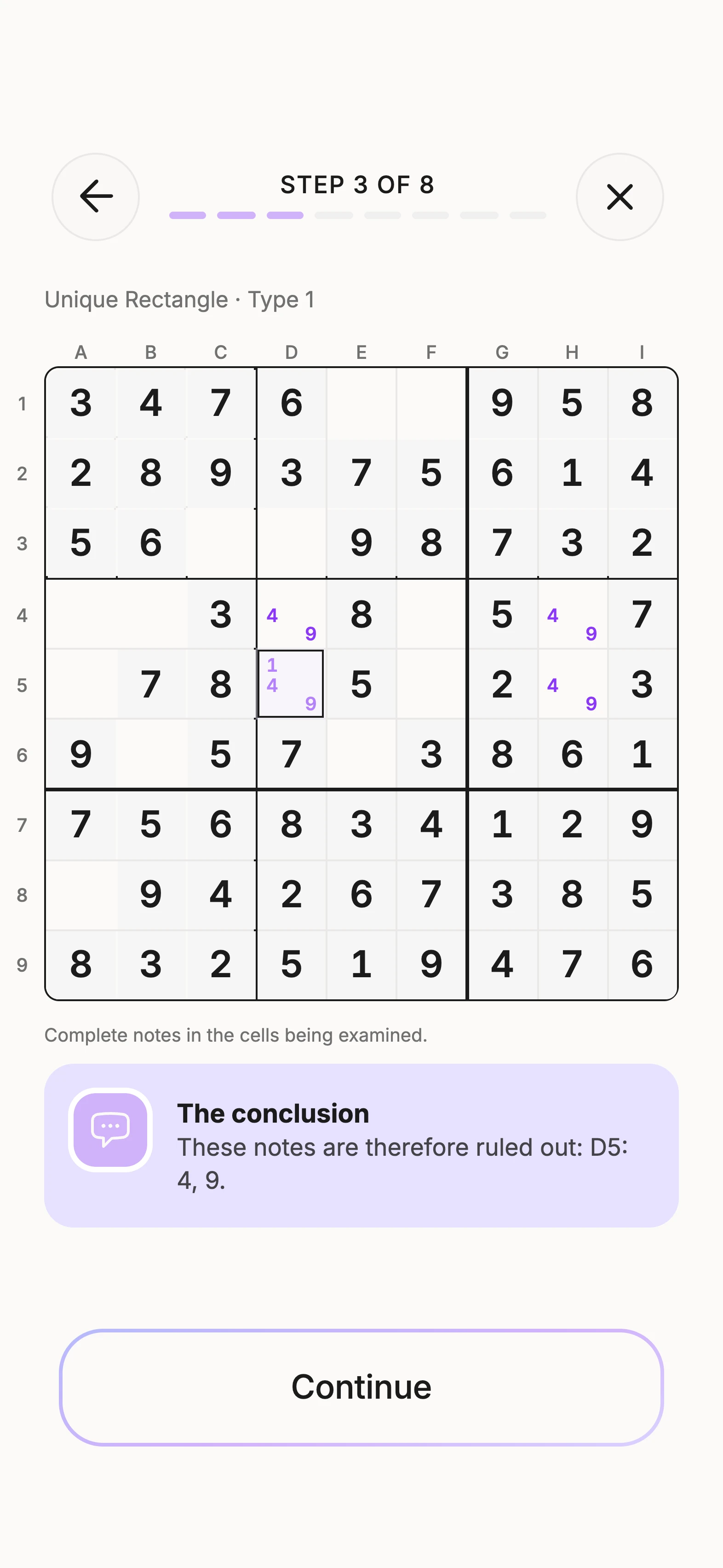
Read more: Jellyfish: Four lines form one patternUnique Rectangle requires a guaranteed unique solution. This example uses four cells in two boxes to show how that condition rules out a candidate.
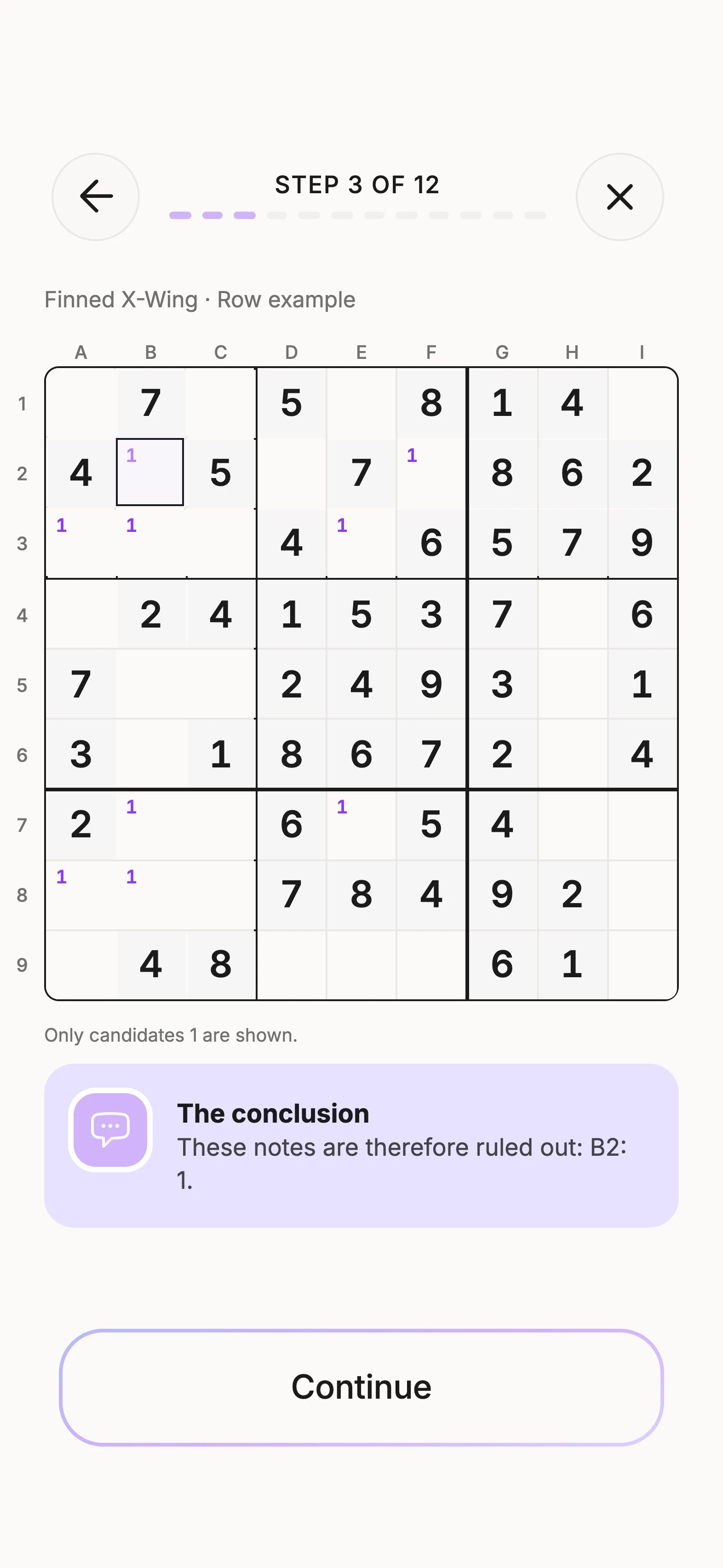
Read more: Unique Rectangle: Avoid a second solutionA Finned X-Wing adds a fin to the basic pattern. Remove only candidates that conflict with both the fin and the X-Wing left when the fin is false.
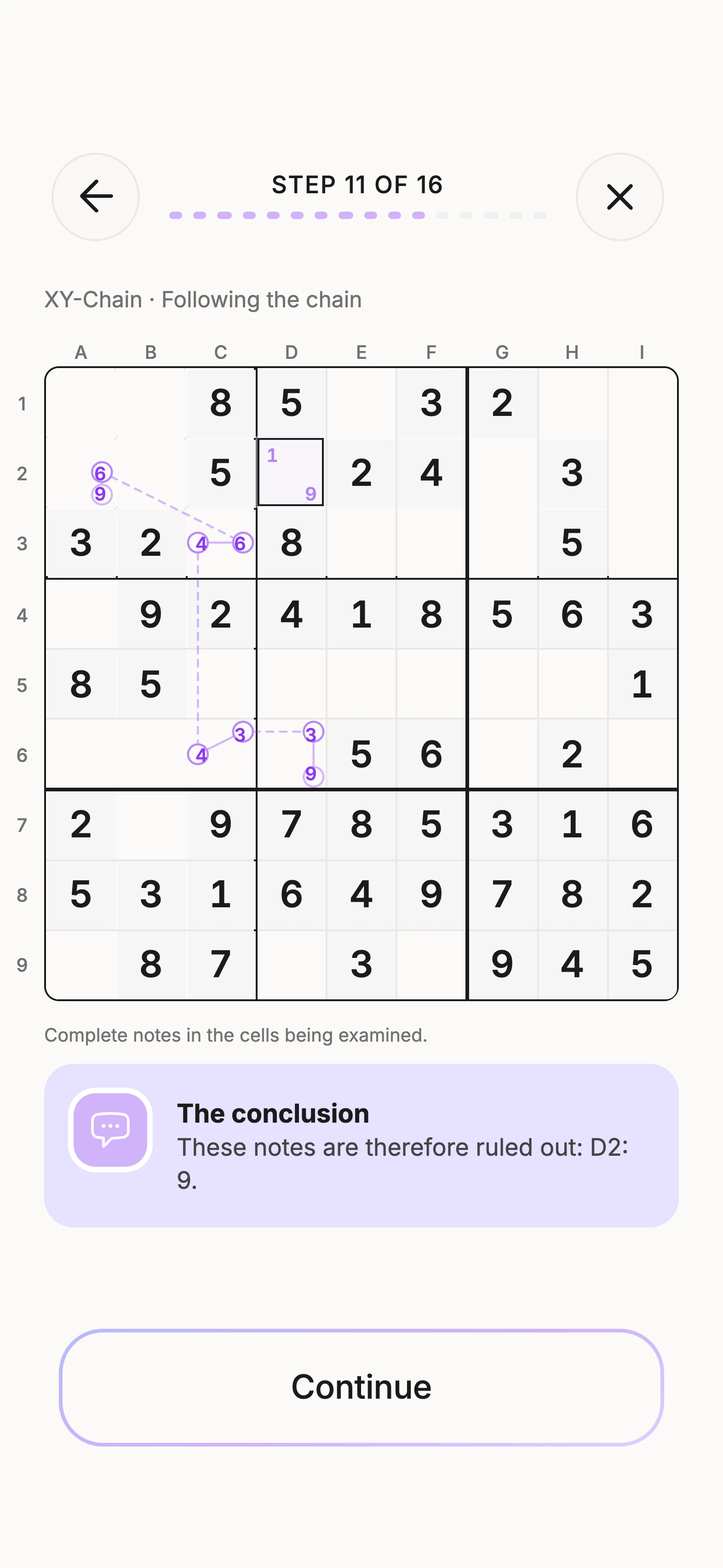
Read more: Finned X-Wing: An X-Wing with an extra possibilityAn XY-Chain links cells with exactly two candidates each. Follow the example to see where the shared digit at the two ends can be eliminated.
Read more: XY-Chain: Link cells with two candidatesNo articles found. Try another search.
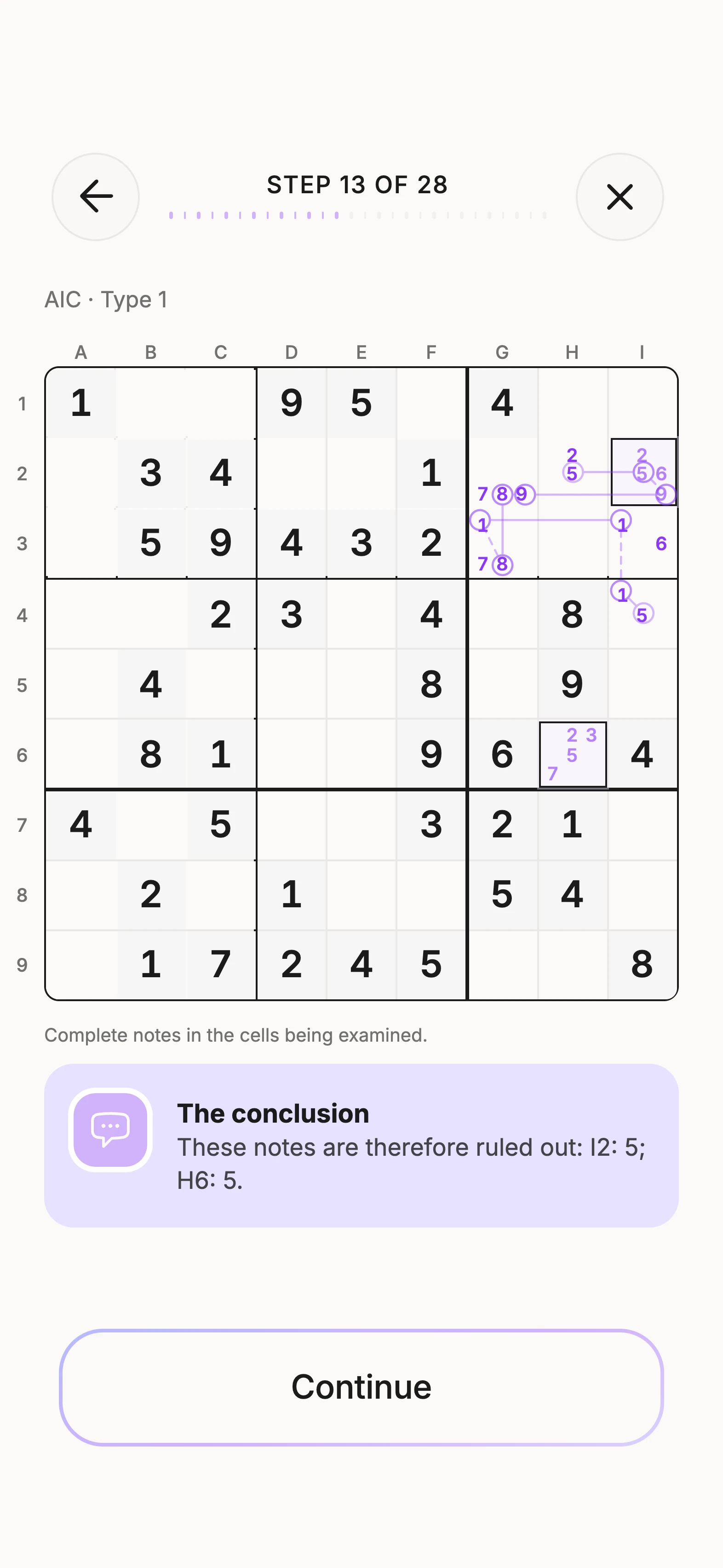
An AIC connects candidates using alternating strong and weak relationships. An assumption can then be followed along the chain to a certain deduction.
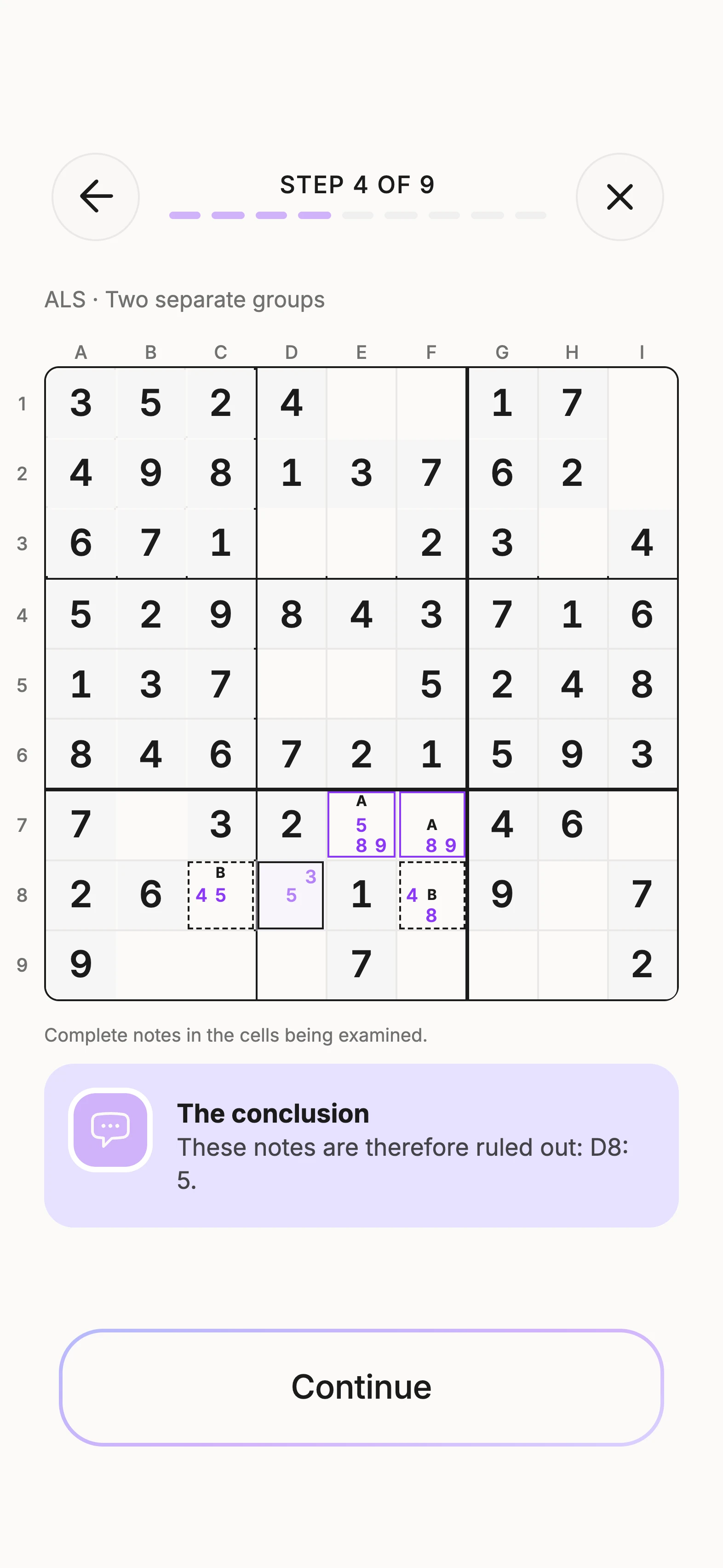
Read more: AIC: Alternate strong and weak linksAn ALS is a group of n cells in one area with n+1 distinct digits among their candidates. Two such groups can interact through a restricted common candidate.
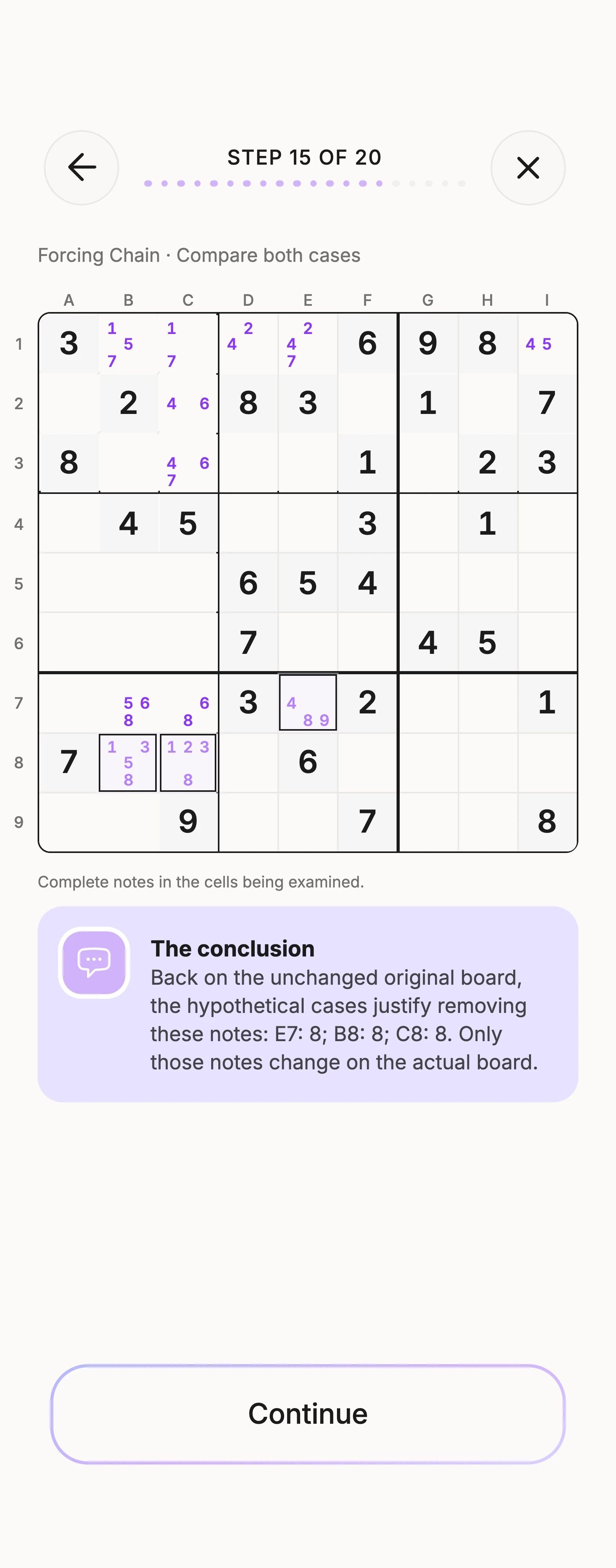
Read more: ALS: Connect almost locked candidate groupsA Forcing Chain checks both candidates of a cell in separate branches. If both branches force the same elimination, you can apply it with certainty.
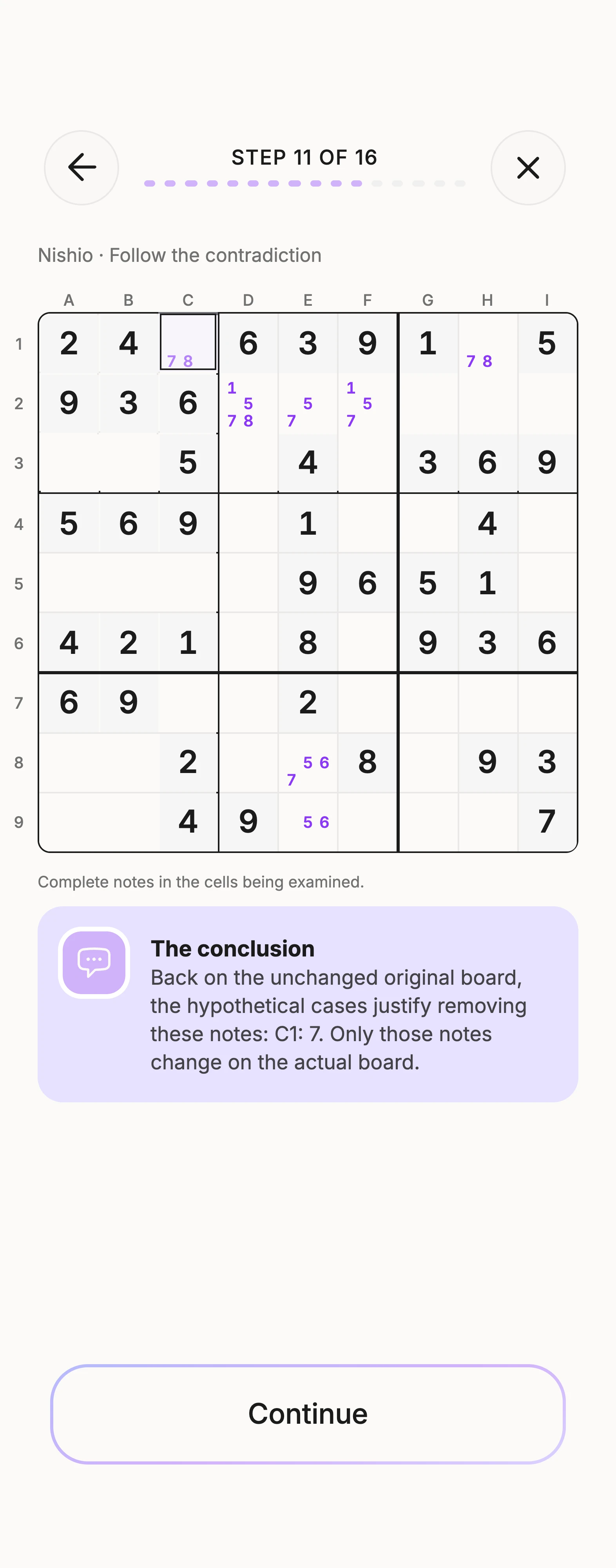
Read more: Forcing Chain: Examine two possibilities separatelyNishio tests one candidate by following the moves it forces. If it leaves a cell with no option or a required digit with no place, reject that candidate.
Read more: Nishio: Test an assumption through contradictionNo articles found. Try another search.
A small note records a possibility. Learn how candidates differ from placements and how to keep them up to date.
Read more: Sudoku pencil marks: track and update candidatesCheck nearly full areas, then candidates and singles. Build a routine for finding a move you can explain.
Read more: Solve Sudoku without guessing: a repeatable search orderThe techniques you need tell you more than the number of gaps. See how Unisu organizes its 16 game levels.
Read more: Sudoku difficulty levels: what makes a puzzle demanding?No articles found. Try another search.
No. Each method needs particular candidate relationships. Its name does not justify a move when those conditions are absent.
Check missing digits and Singles first. Move to smaller candidate patterns before following long chains.
A missing possibility can create a false pattern. Work from the actual candidates, rather than assuming the displayed notes are complete.
Pairs reserve digits within an area. Fish connect one digit’s positions across rows and columns; Wings use relationships between cells with few candidates.
Unisu has guided lessons on its active techniques. Choose a method whose prerequisites you know before attempting longer chains.
Download Unisu on your phone. Start a Sudoku or choose a lesson on the technique you want to understand.